Atividades De Cores Em Inglês
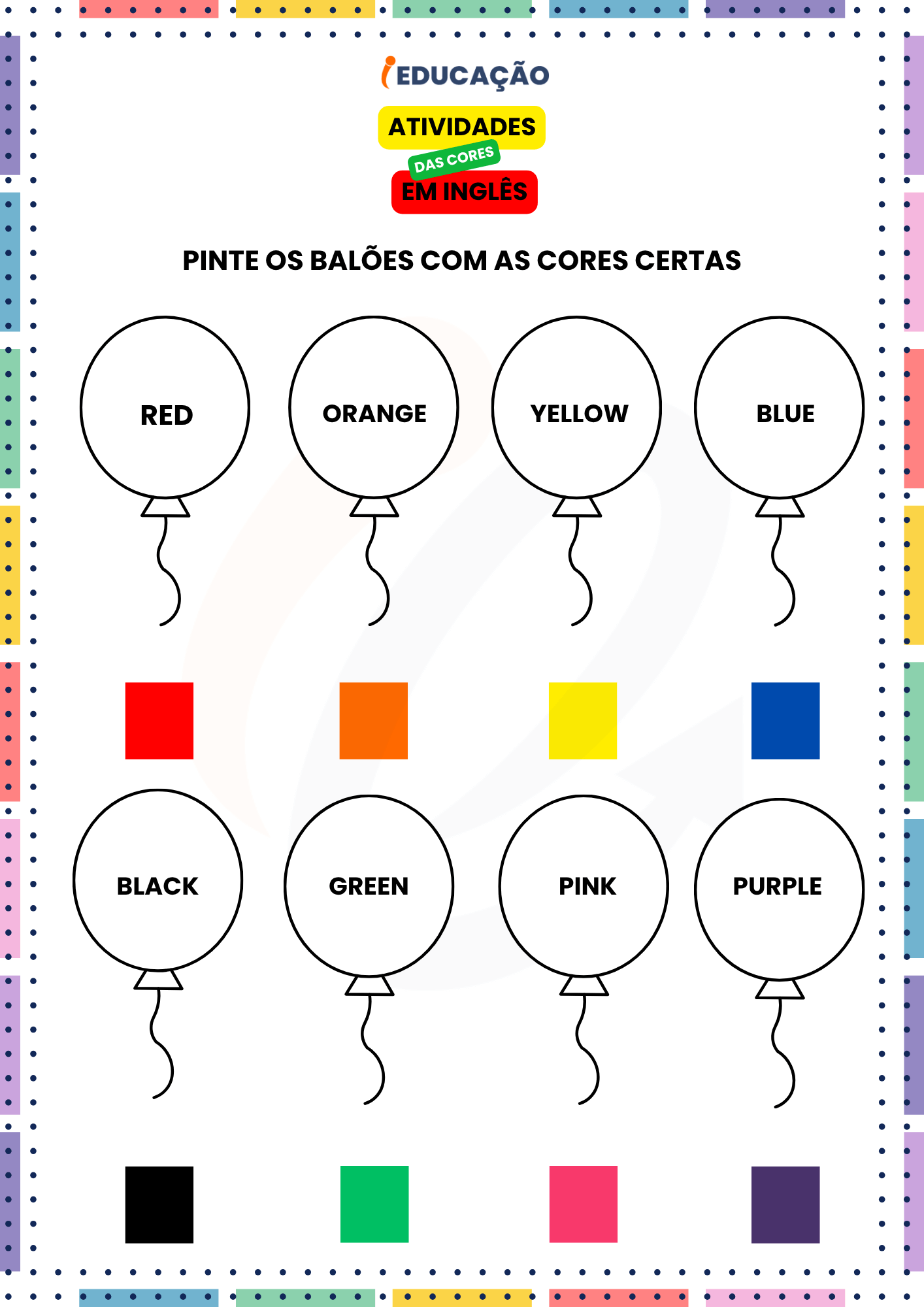
Exploring atividades de cores em inglês is a fun and effective way to build vocabulary while training your eye for detail in daily life. When you learn color names and related actions in English through playful exercises, you begin to describe objects, moods, and environments with more precision and confidence. This approach turns simple observation into an engaging game that works for children and adults alike, reinforcing memory through repetition, visual cues, and real-world contexts.
Labeling Objects Around You
A straightforward way to practice atividades de cores em inglês is to label items in your immediate surroundings. Choose a room, a workspace, or even a small area of your home and identify the dominant color of each object using short English phrases like “the chair is brown” or “the notebook is gray.” You can say these labels aloud, write them on sticky notes, or use a digital voice recorder to capture your descriptions, which helps connect spoken sounds with written forms and reinforces correct spelling.
As you repeat this exercise, you will notice patterns in how English speakers pair nouns with color adjectives, such as “red apple,” “blue sky,” or “white wall.” These combinations become familiar chunks that you can reuse in new sentences, improving both your fluency and your ability to understand others quickly. Over time, this habit of labeling strengthens visual memory and makes it easier to follow instructions or conversations that rely on color cues.

Sorting and Categorizing by Hue
Sorting objects by color is another effective method for mastering atividades de cores em inglês. Gather items such as pens, clothes, books, or kitchen utensils, then group them into piles based on their shade, like “black,” “silver,” or “gold.” While you sort, describe each group aloud in English, using phrases such as “these are green markers” or “that pile contains yellow and orange fruits.” This spoken practice builds your comfort with the language and helps you internalize the correct word order.
You can increase the challenge by mixing similar colors, such as navy and royal blue, or olive and forest green, and then explaining the subtle differences using comparative terms like “darker,” “lighter,” or “more intense.” This activity not only sharpens your color discrimination but also expands your descriptive vocabulary. By narrating your sorting process, you create a self-directed speaking session that feels like a game rather than formal study.
Following and Giving Color-Based Instructions
Practicing atividades de cores em inglês through instructions is excellent for developing listening accuracy and command of imperative forms. Ask a friend, family member, or language partner to close their eyes while you arrange several colored objects in a specific order, such as “place the red block on top of the blue cylinder.” Then, in English, guide them step by step using precise color names and spatial terms like “next to,” “below,” or “to the left of.”

Reverse the roles so that you are the one giving directions, which encourages you to structure clear, simple sentences and check whether your partner understands correctly. You can add complexity by introducing mixed commands, such as “take the yellow pencil, move it to the left, and draw a small circle in orange,” which tests both your color vocabulary and your ability to construct longer, logically connected phrases. This interactive format mimics real-life situations where accurate color identification is essential.
Creating Art and Describing It in English
Artistic activities offer a vivid context for atividades de cores em inglês, especially when you combine painting, drawing, or collage with English narration. As you choose shades for a landscape, portrait, or abstract design, talk through your decisions in English, explaining why you selected “magenta for the sunset” or “turquoise for the ocean waves.” This habit links emotional expression with specific color names, making them more memorable.
After finishing your artwork, describe it to an imaginary audience or record a short commentary in English, focusing on the palette, contrasts, and emotions the piece evokes. You might say, “the background is mostly violet, but I added pink highlights to suggest softness,” which practices detailed observation and richer vocabulary. Sharing your creations with others and discussing their colors in English can boost confidence and encourage experimentation with more advanced descriptive language.
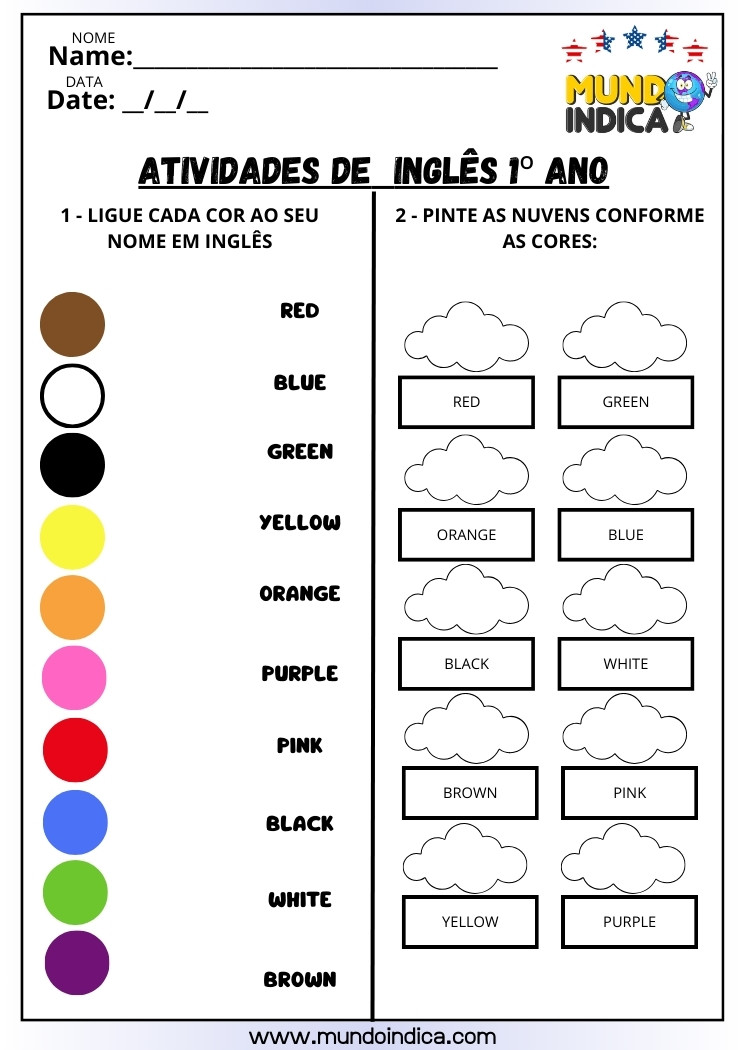
Using Songs, Rhymes, and Chants
Music and rhythm are powerful tools for memorizing color terms, so incorporating songs and chants into your routine supports atividades de cores em inglês in an enjoyable way. Sing along to English color songs, clap the rhythm, and repeat the lyrics, paying attention to how each color word fits into the melody and stress patterns. Rhymes and call-and-response chants also help you practice pronunciation, intonation, and quick recall without feeling pressured by grammar rules.
You can create your own simple chants by lining up color words in a catchy sequence, such as “red and blue make purple, yellow and blue make green,” and repeat them while doing light physical activity like stretching or walking. This multisensory approach reinforces memory through sound, movement, and visual imagination, making it easier to retrieve the correct color names in spontaneous conversation or writing tasks.
Playing Games with Color Flashcards
Flashcard games are a flexible and efficient method for drilling atividades de cores em inglês anywhere and anytime. Prepare a set of cards with English color names on one side and corresponding images or colored patches on the other, then test yourself by flipping each card and naming the shade aloud before checking the answer. You can also play quick games like “snap” or “memory” with a study partner, where matching colors and words under time pressure sharpens recognition speed.

To deepen learning, add simple sentences to each card, such as “the traffic light is green” or “the frog is green,” so you practice both isolated color terms and their usage in context. Regular, short sessions with flashcards build automaticity, allowing you to retrieve color names instantly during real interactions. This low-stakes practice reduces hesitation and helps you feel more fluent when describing scenes, preferences, or directions in English.
By weaving these atividades de cores em inglês into your daily routine, you turn color practice into an enjoyable, multi-sensory experience that strengthens vocabulary, listening, and speaking skills. The more you engage with colors through observation, description, and interaction, the more naturally these words will appear in your active memory. Over time, this focused play with color will not only enrich your English but also help you see and express the world around you with greater clarity and confidence.
As Cores em Inglês | Aprender as Cores em Inglês
As cores em inglês. Nesse vídeo você vai aprender o nome das cores em inglês de uma jeito fácil e divertido, além de aprender o ...
