Atividades Sobre Frutas Em Inglês
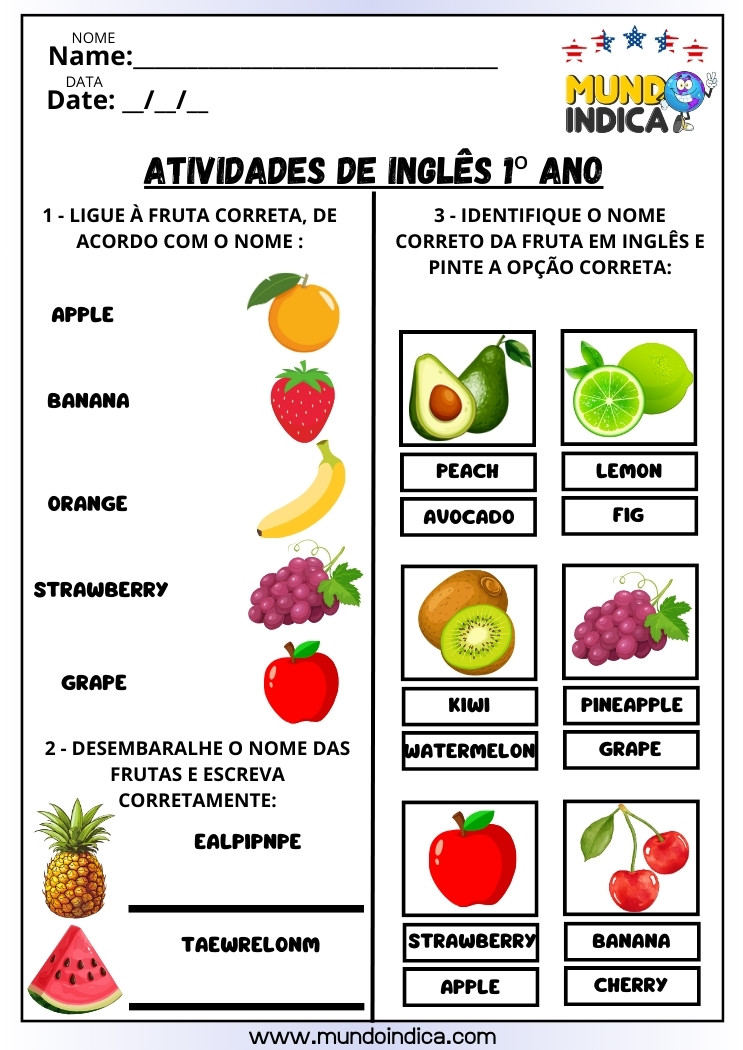
Exploring atividades sobre frutas em inglês is a powerful way to build vocabulary, improve speaking confidence, and bring a little color into your language practice. Whether you are teaching children, studying on your own, or preparing for a class, fruit-themed lessons give you a fresh and tasty context to work with. In this article, you will find practical ideas, step by step guidance, and adaptable routines that turn everyday produce into memorable learning moments.
Warm up games to spark interest in fruit vocabulary
Starting with a lively warm up helps students feel relaxed and ready to use new words. One simple game is Fruit Basket, where learners walk around a circle of chairs while music plays, and you call out a fruit name such as apple, banana, or orange. When the music stops, everyone rushes to sit, and the student left standing becomes the caller, reinforcing pronunciation and listening skills in a low pressure way.
Another quick option is I Spy with my Little Eye, using colors or initial sounds like I spy something that starts with B. This encourages students to connect the sound of the word with its spelling and meaning. You can also flash pictures of fruits on the board and ask students to shout the English name, turning recognition into a fun, fast paced challenge that builds automatic recall.
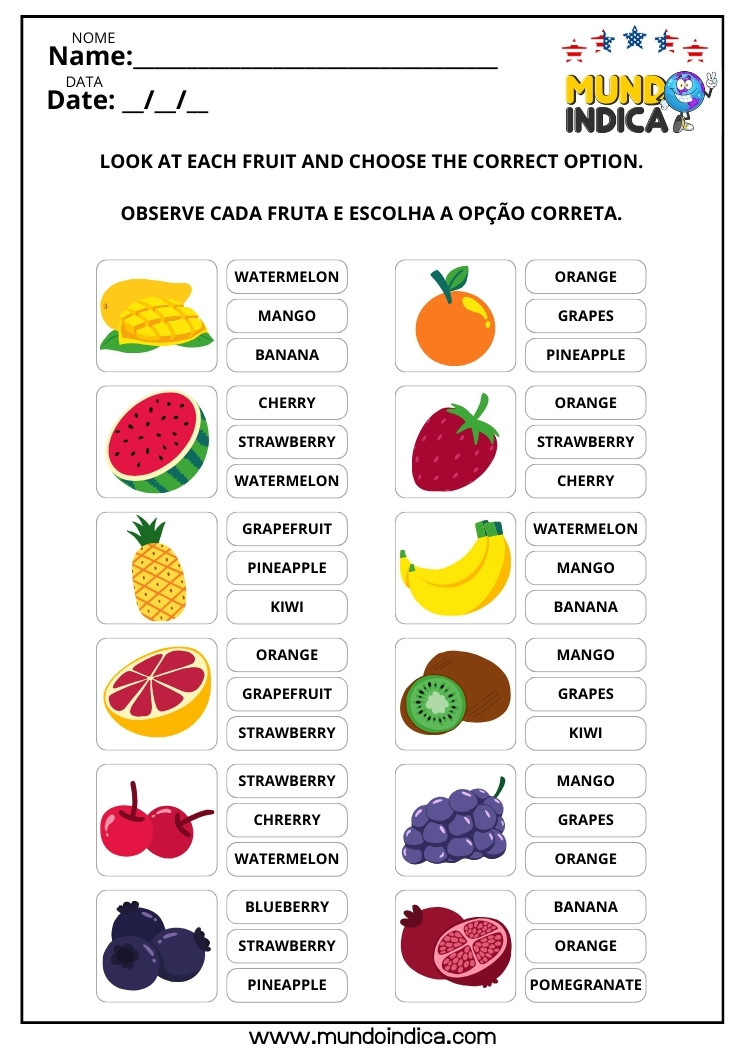
Hands on activities for real world fruit learning
Bringing real fruit into the classroom or home creates a multisensory experience that words on a page cannot match. Before you begin, check for allergies and choose safe, familiar options like apples, pears, grapes, strawberries, and kiwis. Learners can practice asking for pieces politely, using phrases like Can I have some grapes, please or Could you pass the banana, and then describe texture, taste, and color in full sentences.
Consider a tasting station where small plates display different fruits, and students rotate while completing simple tasks. For example, they might write one adjective per fruit, draw a quick symbol, or rate sweetness on a scale from one to five. This naturally leads to richer language, as they compare flavors, talk about healthy habits, and use comparative structures like This kiwi is tangier than the apple.
Creative projects that reinforce spelling and structure
Project based work turns atividades sobre frutas em inglês into a deeper learning journey. One idea is a class fruit market, where students take on roles such as shopper, seller, and cashier. They prepare price tags, write short dialogues, and practice polite expressions while exchanging fruit names and numbers, which strengthens both vocabulary and real life communication skills.

Alternatively, learners can design a colorful Fruit Poster or digital slide, labeling each item and adding short notes about origin, nutrients, or favorite recipes. Encourage them to use clear headings, bullet points for characteristics, and simple captions. Presenting these posters to the class helps consolidate new terms and boosts confidence in public speaking.
Reading and writing tasks connected to fruit themes
Reading short texts about fruit introduces students to new structures in context. You can use simple stories about a day at the market, a recipe for fruit salad, or a description of tropical fruits from different countries. While reading, ask learners to highlight fruit names, underline adjectives, and guess meanings from context, which supports both decoding skills and vocabulary growth.
For writing, invite students to keep a Fruit Diary in English, noting what they ate each day and how they felt. They can describe one fruit in detail using the five senses, or compare their favorite fruit from childhood with a new one they tried in class. Over time, these short entries help them practice past tense verbs, connectors, and personal expression in a natural way.

Using songs, chants, and visuals to support memory
Music and rhythm make language stick, and there are many simple songs about fruits that work well in group settings. Clap and sing along to lines that repeat apple, banana, orange, and pear, paying attention to stress and intonation. You can also create your own chant, incorporating actions or sounds, so that students associate each word with a physical gesture and a memorable melody.
Visual aids such as flashcards, picture dictionaries, and word walls are equally valuable. Keep a set of fruit cards on display and use them for quick review games, matching, or sorting by color, size, or origin. When students see the images and words together regularly, they build stronger mental connections that make retrieval during speaking tasks much easier.
Extending the topic to culture, health, and global awareness
Linking fruit to culture and health turns atividades sobre frutas em inglês into a broader learning experience. Explore how different countries eat fruit at breakfast, in desserts, or as street food, and discuss why some fruits are seasonal in certain regions. Learners can share family traditions, compare food pyramids, and talk about the role of fruit in staying healthy, using both simple and more advanced vocabulary depending on their level.

You might also introduce basic ideas about agriculture, such as how fruits grow on trees, vines, or bushes, and the importance of sustainable farming. Short discussions about food miles, local markets, and reducing waste can encourage students to think critically. By connecting language goals with real world topics, you help them see English as a tool for understanding and participating in the world around them.
In the end, atividades sobre frutas em inglês work best when they are varied, engaging, and closely tied to clear learning objectives. By mixing games, real fruit experiences, creative projects, reading and writing tasks, songs, and cultural exploration, you create a rich environment where students can encounter fruit vocabulary in many different contexts. This variety not only strengthens memory but also keeps motivation high, turning what could be a simple theme into a vibrant and rewarding language journey.
Frutas em inglês - Nome das frutas em inglês - Como falar as frutas em inglês
Frutas em inglês - Nome das frutas em inglês - Como falar as frutas em ingles Aprenda a falar o nome das frutas em inglês, essa ...
